
PROGRAMMING:N-ary high precision addition
How to understand the binary system? First of all, there must be the concept of "one", and then it is like this: < br > there must be a concept of "one"
Arrange the symbols used to indicate quantity in order, for example: Q w e r < br > Q w e r < br > Q
Then, the front symbol is defined as "zero", that is, "None", and the number of the following symbols is "one" more than that of the previous one in turn < br > in this paper
For example, when we count the number to Q w e r, and then count one after that, the sign is not enough, then we write it as WQ < br >
In addition, we name this system "WQ" system< br>
Does it feel weird? Then, please change to the so-called "10" system that we are familiar with: < br >
Our symbols used to express quantity are: 0 1 2 3 4 5 6 7 8 9. When we count to 9, and then count "one", we count to 10 < br > in turn
Look at this cartoon (from the Internet) to see if you can understand the concept of "base"?
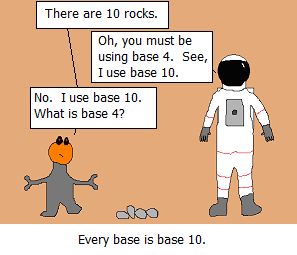
Now, given the number of symbols (these symbols form a system), and two positive integers with no more than 100 bits under the system, please calculate the sum of the two numbers.
###Input format:
The first line is a given number of symbols. Each symbol is a character, different from each other, and there is no space in the middle. There are at most 30 symbols, and the possible ranges of symbols are: numbers' 0 '-' 9 ', upper and lower case letters'!', '@', '#', '$', '%', '^', '&', '*', '(', ')< br>
Each of the next two lines gives a positive integer with no more than 100 bits under the system
###Output format:
Output the sum of the two numbers under the base in one line.
###Input sample 1:
```in
0123456789
one hundred and twenty-three
twelve
```
###Output sample 1:
```out
one hundred and thirty-five
```
###Input sample 2:
```in
abcd
bcd
bc
```
###Output sample 2:
```out
cab
```
answer:If there is no answer, please comment
Arrange the symbols used to indicate quantity in order, for example: Q w e r < br > Q w e r < br > Q
Then, the front symbol is defined as "zero", that is, "None", and the number of the following symbols is "one" more than that of the previous one in turn < br > in this paper
For example, when we count the number to Q w e r, and then count one after that, the sign is not enough, then we write it as WQ < br >
In addition, we name this system "WQ" system< br>
Does it feel weird? Then, please change to the so-called "10" system that we are familiar with: < br >
Our symbols used to express quantity are: 0 1 2 3 4 5 6 7 8 9. When we count to 9, and then count "one", we count to 10 < br > in turn
Look at this cartoon (from the Internet) to see if you can understand the concept of "base"?
Now, given the number of symbols (these symbols form a system), and two positive integers with no more than 100 bits under the system, please calculate the sum of the two numbers.
###Input format:
The first line is a given number of symbols. Each symbol is a character, different from each other, and there is no space in the middle. There are at most 30 symbols, and the possible ranges of symbols are: numbers' 0 '-' 9 ', upper and lower case letters'!', '@', '#', '$', '%', '^', '&', '*', '(', ')< br>
Each of the next two lines gives a positive integer with no more than 100 bits under the system
###Output format:
Output the sum of the two numbers under the base in one line.
###Input sample 1:
```in
0123456789
one hundred and twenty-three
twelve
```
###Output sample 1:
```out
one hundred and thirty-five
```
###Input sample 2:
```in
abcd
bcd
bc
```
###Output sample 2:
```out
cab
```
answer:If there is no answer, please comment